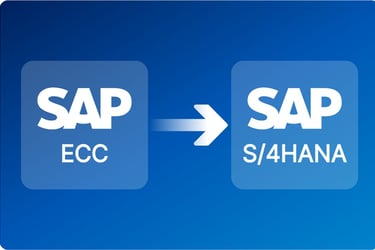
EAM Doesn’t Pause for S/4HANA
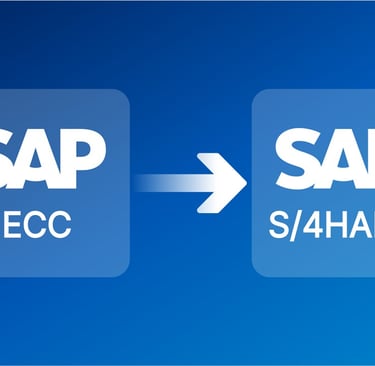
Most S/4HANA transformations are framed as technology programs. Modernize the core. Simplify the data model. Standardize processes.
Enterprise Asset Management doesn’t cooperate with that narrative.
Assets keep running. Equipment keeps failing. Permits still need signatures. Emergency work has a habit of showing up at exactly the wrong time. Unlike finance or procurement, maintenance execution continues every day while the transformation is underway.
That reality makes EAM a special — and often underestimated — case in S/4HANA programs.
S/4HANA Exposes Execution Gaps — Fast
S/4HANA is more structured, more integrated, and far less tolerant of workarounds than ECC. That’s a feature — assuming execution discipline already exists.
When planning, readiness, backlog control, and materials alignment are unstable, S/4HANA doesn’t gently suggest improvement. It exposes the gaps immediately. Schedules unravel faster. Material issues surface earlier. Master data problems that used to be manageable suddenly bring work to a full stop.
This is usually the moment someone says, “We thought S/4 would fix this.”
It won’t.


Blueprints Look Great.
Monday Morning Is Less Forgiving.
Most S/4HANA methodologies are optimized for design completeness and technical correctness. On paper, everything behaves. Swim lanes line up. Decision trees are tidy. Governance models look reassuring.
Then the plant starts up on Monday.
Emergency work doesn’t wait for governance. Planners don’t get perfect information. Supervisors make judgment calls to keep assets running — even when the process diagram would prefer they didn’t.
SAP Signavio plays a critical role here. Used early, it shows what is really happening, not what everyone remembers from the workshop. It exposes execution variants, rework loops, and decision delays that quietly drain capacity.
Insight, however, is not intervention.


Stabilize Execution Instead of Hoping It Improves Later
Procex approaches S/4HANA EAM transformations from the execution side, not the blueprint side.
Rather than asking organizations to get everything perfect before migration — a strategy that has yet to succeed — Procex introduces modular, affordable applications that stabilize the most fragile parts of maintenance execution first.
Each application targets a failure mode maintenance teams recognize immediately: unready work, chronic execution barriers, unstable backlogs, and material-driven delays. Results show up quickly, which is refreshing for teams used to hearing about benefits scheduled for Phase 4.
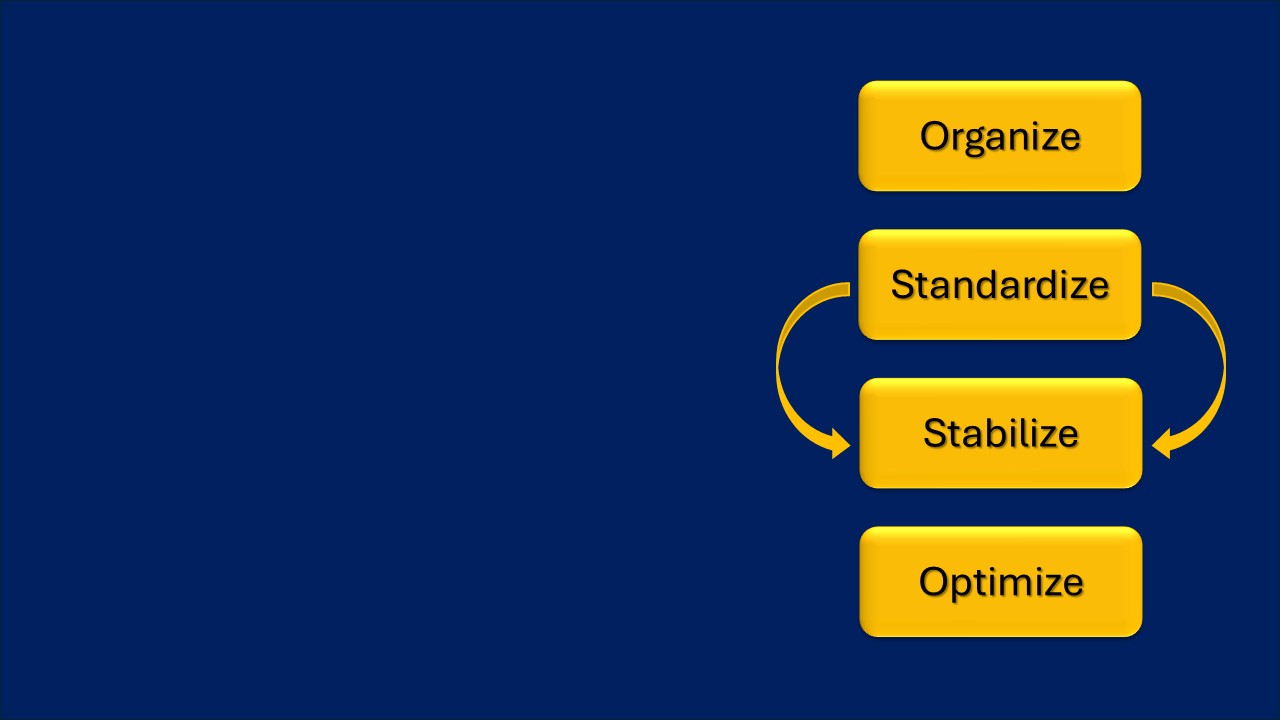
After go-live, Procex stays in place as part of the operating model, reinforcing discipline and preventing the slow slide back into old habits. This turns S/4HANA from a one-time event into a platform that actually supports continuous improvement.
Clean core, no invasive customization, and no upgrade regrets waiting down the road.
Execution Support Across the Entire S/4HANA Journey


Before migration, Procex stabilizes day-to-day execution so weak behavior doesn’t get permanently baked into the new system.
During transition, the same applications provide continuity while processes, data structures, and roles are changing — because confusion is never in short supply during go-live.
Optimizing business processes for maintenance efficiency.
cOMPANY
1326 N. Sandburg Ter.
Chicago, IL 60610
gET IN TOUCH
+1 (312) 480-8888
© 2026. All rights reserved Procex Technology, Inc.
Privacy Policy and Terms of Service